
Questions?
0430 046 058
You turn the aircon on. You wait.
And somehow… the house still feels hot.
The fan is blowing, the unit is working, and the power bill is climbing. Yet the rooms never quite cool down. The air feels heavy. The heat sticks around.
At some point, frustration kicks in and you start wondering if your aircon is broken.
But here’s the thing most homeowners do not realise. In many cases, the problem is not the aircon at all. It is what is happening above your ceiling.
Let’s talk about why.
When a house feels hot even with the air conditioning running, most people assume the unit is the problem. That makes sense. It is the most visible part of the system, and it is the thing you interact with every day.
But in many Brisbane homes, the aircon is doing exactly what it is meant to do. The real issue is that the cool air it produces is being overwhelmed by heat entering the house faster than it can be removed.
That heat almost always comes from above.
On a sunny day in Queensland, a roof can easily reach temperatures of 60 degrees or more. That heat does not just sit there. It radiates downward into the roof cavity and straight through the ceiling into the rooms below.
If there is little or no insulation, the ceiling plaster heats up and acts like a warm panel over every room. Even if the aircon cools the air for a short time, the ceiling keeps feeding heat back into the space.
This is why some homes feel hot even at night. The roof and ceiling have stored heat all day and release it slowly long after the sun goes down.
Air conditioning cools air, not buildings. If the building itself is not protected, that cool air has no chance of staying put.
Without proper ceiling insulation, cool air escapes upward while hot air pushes back down. The system turns into a constant tug of war that the aircon cannot win.
This is why you might notice the air feels cool near the vent, but the room never quite settles. The aircon cycles on and off, but the temperature barely changes.
Good insulation slows this exchange. It keeps the cool air inside longer and blocks heat from rushing in.
Many homes do have insulation, but it may not be working anymore.
Over time, insulation compresses, shifts, and fills with dust. What once was thick and fluffy can flatten into a thin layer that does very little to stop heat. Gaps appear around wiring, lights, and roof structures, allowing heat to pour through.
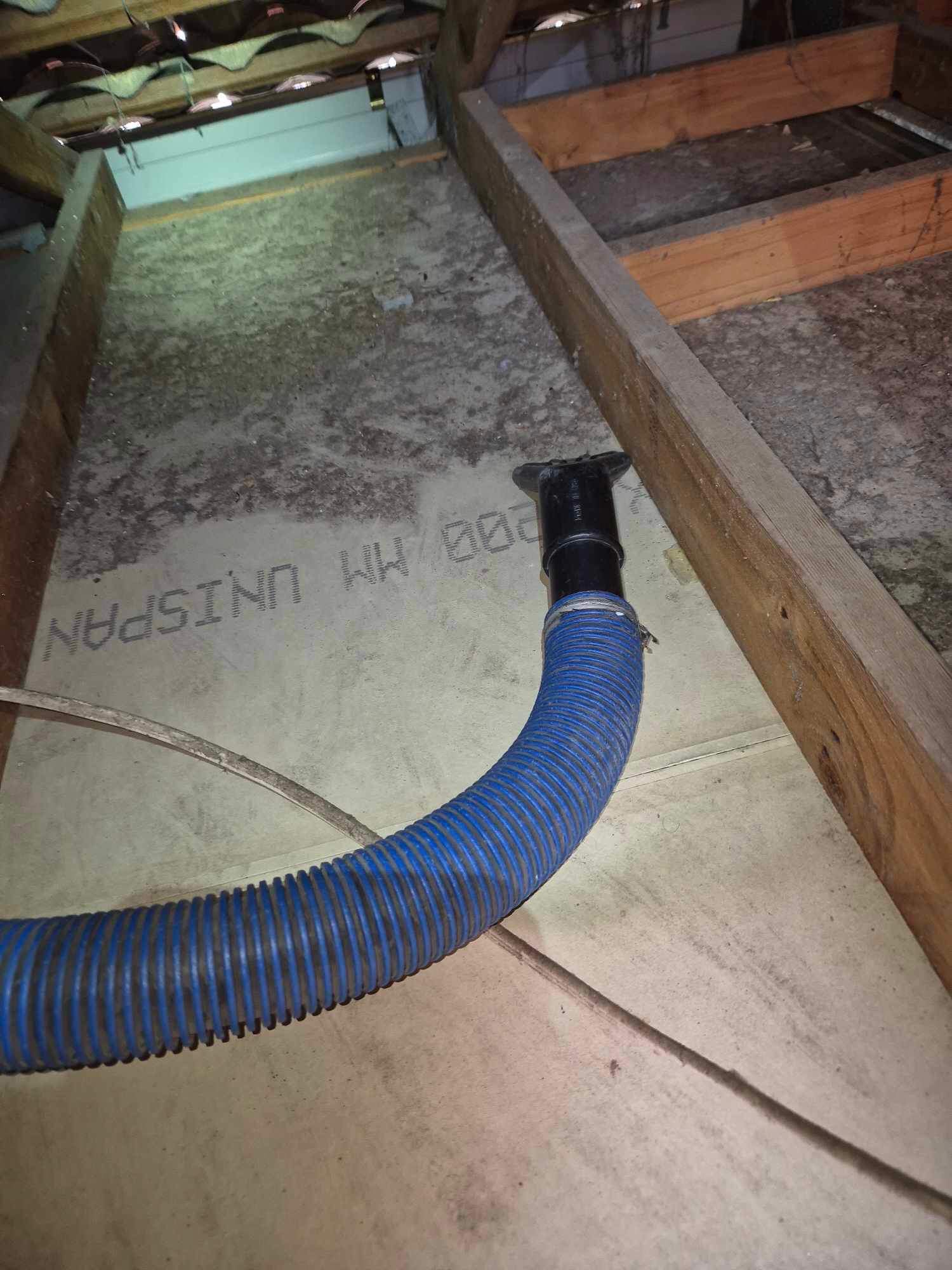
In roof spaces we inspect every week, it is common to find insulation that looks fine from a distance but has lost most of its performance. In some cases, it has been disturbed by trades, pests, or past renovations and never put back properly.
When insulation is old or damaged, the aircon has to work much harder to keep the house comfortable.
Even with insulation, a roof cavity can become a heat trap if there is no way for hot air to escape.
As the roof heats up, the air inside the cavity expands and becomes hotter. If that air cannot vent out, it sits there all day, pressing heat down onto the insulation and ceiling.
Roof ventilation helps by allowing hot air to escape and cooler air to flow in. This lowers the overall temperature of the roof space, which reduces the load on the insulation below.
Homes with good ventilation often feel more comfortable even before insulation is upgraded. When both are combined, the results are far more noticeable.
Another common complaint is that some rooms feel cooler than others.
This often happens because insulation coverage is uneven. One room may have thick, well placed batts, while another has thin or missing sections. Heat finds the weakest point and spreads from there.
Poor airflow design can add to the issue, but insulation problems are usually the main cause. Fixing the ceiling insulation often balances temperatures across the whole home.
When insulation is poor, the air conditioner runs longer and more often. This shows up clearly on electricity bills.
Many homeowners assume rising power costs are unavoidable. In reality, a lot of that energy is being wasted fighting heat that should never have entered the house in the first place.
After insulation upgrades, we regularly hear from clients who notice their aircon running less and their bills dropping. The house feels cooler faster and stays that way longer.
At Ceiling Vac Specialist, we spend our days inside roof cavities. What we see is very consistent.
Homes that struggle to stay cool usually have one or more of the following issues:
Once these problems are addressed, the change is immediate. The aircon becomes more effective, rooms feel more comfortable, and the house stops fighting itself.
Cranking the aircon lower rarely solves the problem. It just increases running costs while the underlying issue remains.
The goal is not colder air. The goal is a home that holds a stable temperature without constant effort.
That only happens when heat is controlled at the ceiling level.
If your house feels hot even when the aircon is on, the issue is usually not the system itself. It is the conditions it is working against.
In many Brisbane homes, heat builds up in the roof space and pushes down through the ceiling all day long. Without proper ceiling insulation, good ventilation, and a clean roof cavity, cool air struggles to stay inside. The aircon keeps running, but comfort never quite arrives.
The good news is that this can be fixed.
A proper roof space inspection can show where heat is getting in and what needs to be improved. For some homes, that means replacing old or flattened insulation. For others, it means removing contaminated insulation, improving airflow, or adding roof ventilation to release trapped heat.
In almost every case, the solution starts above the ceiling.
If your Brisbane home never seems to cool down, we at Ceiling Vac Specialist can help.
We inspect roof spaces, remove old insulation, and install ceiling insulation and ventilation systems designed for Queensland conditions.
Reach out today for a free quote and find out why your home feels hot, and what can be done to fix it properly.

Sales & Service

Address