
Questions?
0430 046 058
You open a ceiling manhole or change a light and suddenly there is dust everywhere.
It floats down. It smells old. And you start wondering what else has been sitting above your ceiling all this time.
Is insulation supposed to be this dusty? Or is something wrong up there?
If you have ever sneezed after touching your ceiling, this is one question you are right to ask.
No. Ceiling insulation is not supposed to be excessively dusty.
A small amount of dust over many years is normal. Thick layers of loose dust, dirty air smells, or particles falling into the house are not. When insulation reaches that point, it usually means something has gone wrong in the roof space.
To understand why this happens, it helps to know what is actually going on above your ceiling.
Your roof cavity is not a sealed box. Air moves in and out through tiny gaps, vents, and roof tiles. Over time, that moving air carries dust, pollen, dirt, and debris with it.
Add in years of wind, nearby traffic, construction dust, and natural outdoor particles, and it all slowly settles in the roof space. Insulation acts like a giant dust filter. It traps everything that drifts in and holds onto it.
That is normal up to a point.
What is not normal is when insulation becomes so dusty that touching it releases clouds of particles or causes strong smells.
In our experience, heavy dust build-up usually comes from one or more of these issues.
Insulation installed ten or twenty years ago was not designed to stay clean forever. Over time, it breaks down slightly and becomes a magnet for dust. Fibres loosen, air pockets collapse, and debris settles deep into the material.
Once insulation reaches this stage, it is almost impossible to clean properly without removing it.
Rodents, birds, and insects are a major cause of dirty insulation. They bring nesting materials, droppings, and debris into the roof cavity. Over time, this mixes with dust and spreads across the insulation layer.
Even if pests are no longer active, the mess they leave behind remains. That contamination does not just stay put. It can move through ceiling gaps and affect indoor air quality.
Any work done in the roof space can disturb insulation. Electricians, plumbers, and builders often move batts aside to access wiring or pipes. Sometimes the insulation is not put back properly.
This creates gaps and loose areas where dust can settle and air can move freely. Over time, those disturbed sections become much dirtier than the rest of the roof cavity.
A roof space without proper ventilation traps hot air. As temperatures rise and fall, that air expands and contracts, pulling dust deeper into the insulation.
Poor ventilation also allows moisture to build up, which makes dust stick to insulation more easily. This leads to clumping, staining, and musty smells.
Dusty insulation is not just unpleasant. It can create real issues inside the home.
Air moves between the roof cavity and the living space more than most people realise. Through ceiling penetrations, exhaust fans, and small cracks, particles can drift down into the house.
If insulation is heavily contaminated, that dust can enter bedrooms, living areas, and air conditioning systems. This is especially noticeable for people with allergies, asthma, or sensitive sinuses.
Old, dusty insulation often carries a stale or musty smell. In some cases, this smell becomes stronger on hot days when the roof cavity heats up.
No amount of air freshener will fix this because the source is above the ceiling. Until the insulation is removed or cleaned out, the smell keeps returning.
Dust-filled insulation does not work as well. The trapped debris reduces the insulation’s ability to hold air pockets, which lowers its thermal performance.
This means more heat passes through the ceiling, making the house harder to cool in summer and harder to warm in winter.
Yes. A light layer of settled dust over many years is normal, especially in older homes.
The key difference is whether the dust stays put or becomes airborne. Insulation should not release dust into the house when you walk around, turn on a fan, or open a ceiling hatch.
If dust is falling down or you notice particles in the air after any ceiling movement, that is a sign the insulation is no longer in good condition.
This is where ceiling vacuuming comes in.
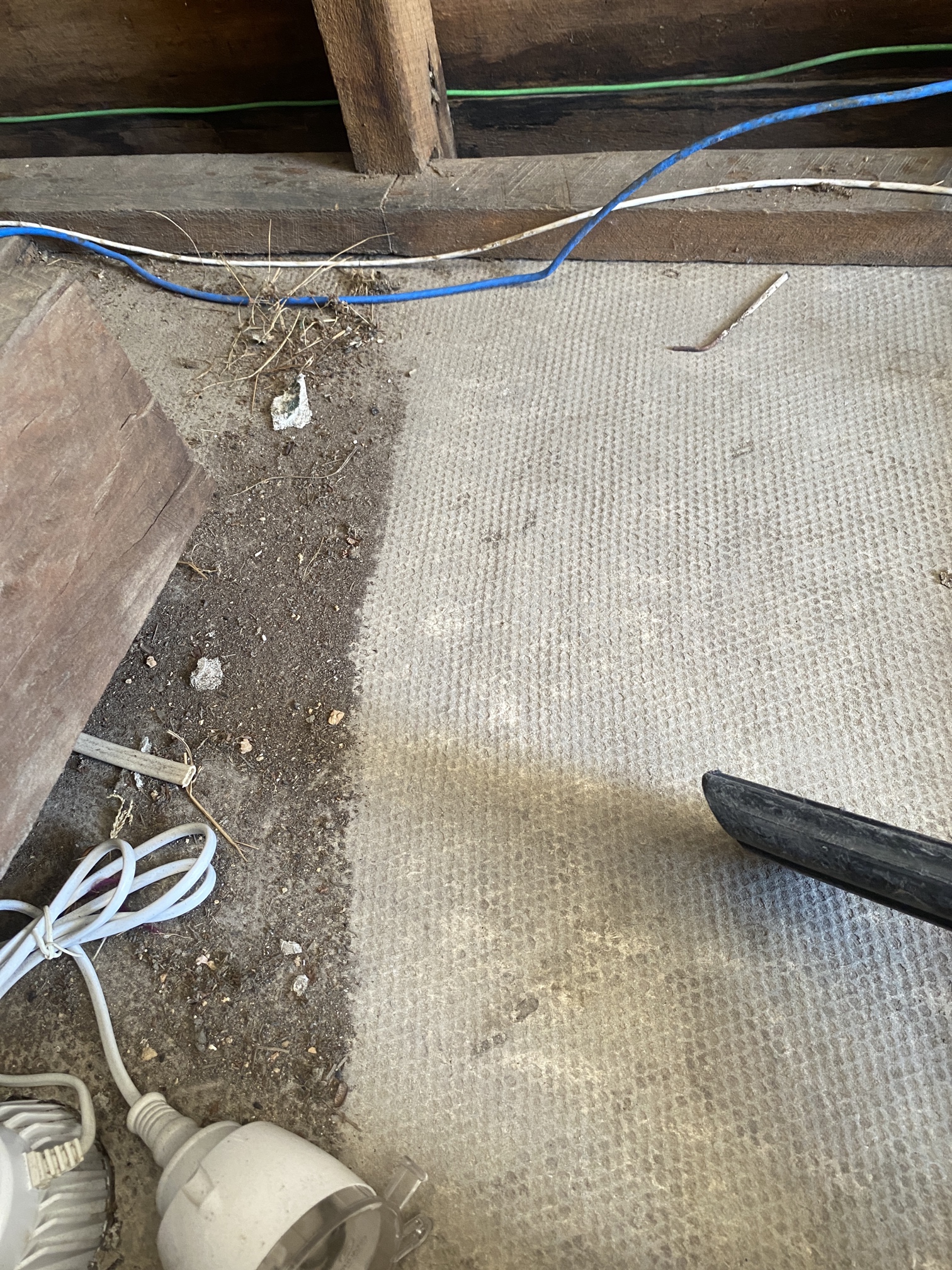
A professional ceiling vacuum removes old insulation, dust, and debris from the roof cavity using industrial equipment. This process clears out years of build-up without spreading it through the house.
Once the roof space is clean, new insulation can be installed on a fresh surface. This improves performance, air quality, and overall comfort.
In many cases, homeowners are surprised by how much dust is removed. Roof cavities often hold decades of debris that has never been touched.
Insulation should be removed rather than left in place when:
Trying to install new insulation over dirty material rarely solves the problem. It can trap dust and moisture underneath, which leads to long-term issues.
A clean removal is usually the better option.
In Brisbane homes, dusty insulation is extremely common. Heat, humidity, and outdoor conditions speed up the breakdown process.
At Ceiling Vac Specialist, we regularly find insulation that looks fine at first glance but releases dust the moment it is touched. We also see roof cavities filled with leaves, dirt, and old debris that has never been cleaned.
Once removed, homeowners often notice an immediate improvement in how the house feels and smells. The air feels fresher. The ceiling space feels lighter. The home becomes easier to cool.
Ceiling insulation is not meant to be thick with dust, smell stale, or drop particles into your home. When insulation reaches that point, it is usually a sign that it has broken down, been contaminated, or disturbed over time.
In many Brisbane homes, years of heat, humidity, and roof space activity slowly turn insulation into a dust trap. That dust does not stay put. It can affect indoor air quality, reduce insulation performance, and make your home harder to keep comfortable.
The fix starts above the ceiling. A proper roof space inspection can show whether your insulation can stay or if it is time to remove it and start fresh. Once the dust and debris are gone, your home feels cleaner, fresher, and easier to cool.
If you are in Brisbane and your ceiling insulation seems dusty, dirty, or past its best, Ceiling Vac Specialist can help. We inspect roof spaces, remove old insulation, and clean ceiling cavities properly before installing new insulation if needed.
Reach out today for a free quote and find out what is really happening above your ceiling, and how to fix it the right way.

Sales & Service

Address