

You have decided the roof space is part of the problem. The ceiling feels warm at night, the bedrooms hold heat, and the air con never seems to get ahead.
So now you are staring at two options.
A classic whirlybird that spins on the breeze, or a solar roof vent with a fan that pushes air out on its own. Both promise a cooler roof cavity. Both look similar from the street. And the price difference makes you wonder if the more expensive one is really worth it.
The honest answer depends on your roof, your insulation, and what you actually want the house to feel like in February.
What Both Vents Are Trying To Do
Before comparing them, it helps to understand the job.
On a hot Brisbane day, the roof cavity can get far hotter than the air outside. That heat sits directly on top of your ceiling insulation and keeps pushing down into the rooms below, well after sunset.
A roof vent gives that hot air somewhere to go.
The Australian Government’s Your Home guide to passive cooling notes that roof ventilators can reduce the temperature difference across ceiling insulation and increase its effectiveness by as much as 100%. That is a big claim from a credible source, and it explains why ventilation keeps coming up alongside insulation.
So the question is not whether ventilation helps. It is which type of vent does the job best for your home.
How A Whirlybird Works
A whirlybird is a wind-driven turbine.
When the breeze moves across the roof, the vanes spin and draw hot air up and out of the cavity. As heat rises, some air will escape even on still days, but the real performance comes from wind.
Whirlybirds have been on Queensland roofs for decades for good reason. They are:
- simple, with no motor or wiring
- low maintenance when installed properly
- available in a wide range of colours to match most roofs
- a cost-effective way to add airflow across several points
The trade-off is consistency. On a hot, still afternoon, exactly when the roof space is cooking, a whirlybird may barely turn.
How A Solar Roof Vent Works
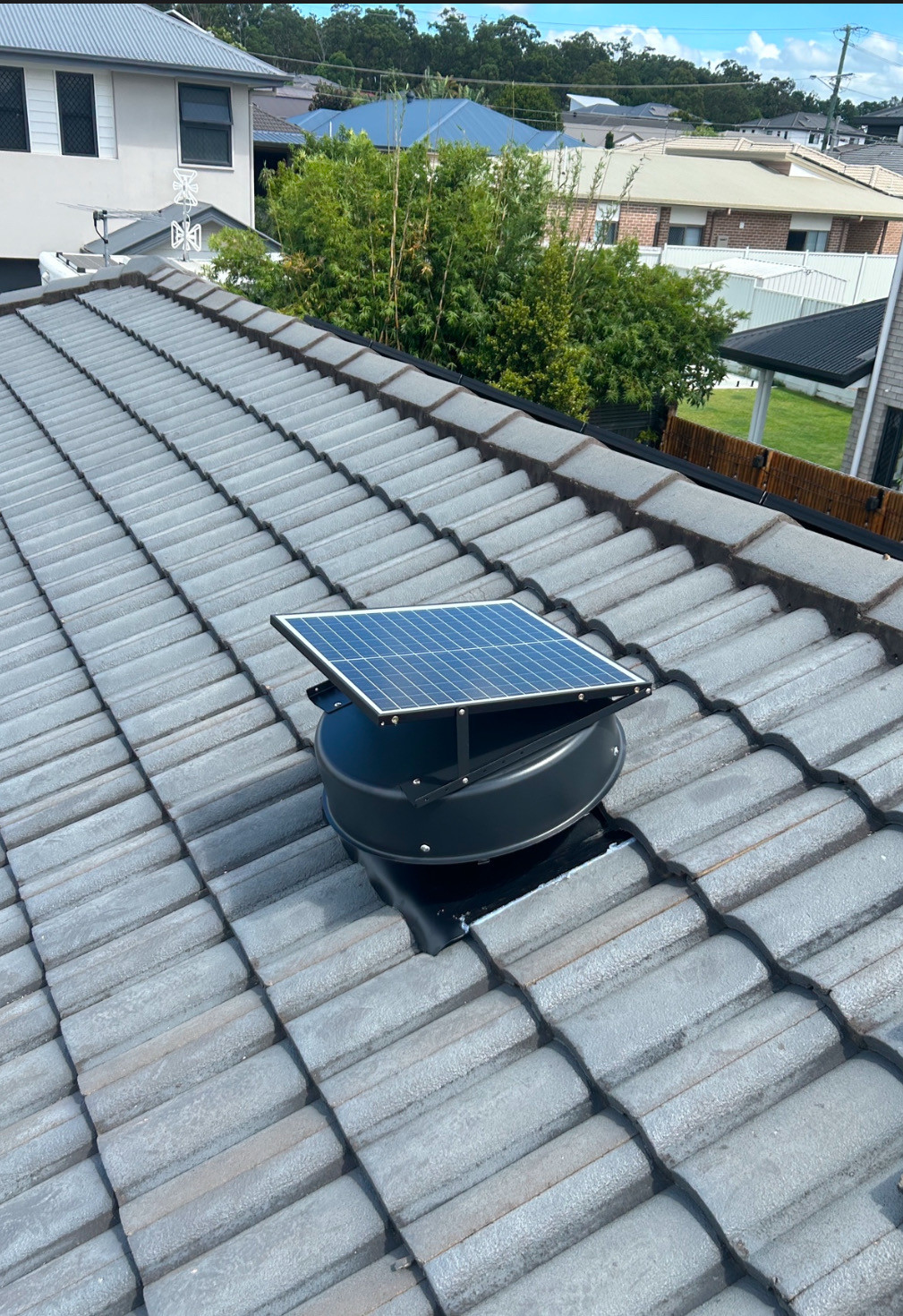
A solar roof vent uses a small solar panel to power a fan that actively extracts hot air from the roof cavity.
It does not rely on the wind. When the sun is strongest, the fan is working hardest, which lines up neatly with when your roof is heating up the most.
For example, the SolarKing 320mm unit we install is rated by the manufacturer at around 2,100 cubic metres of air per hour. That is far more air movement than a passive whirlybird is designed to deliver, which is why one solar unit can often do the work of several wind-driven vents.
Most good solar roof ventilation units also include:
- a thermostat so the fan is not pulling warm air out in winter
- a quiet brushless motor
- an adjustable panel for roofs that do not face north
- no running costs, because the power comes from the sun
The trade-off is upfront cost. A solar unit costs more per vent than a whirlybird.
Solar Roof Vent Vs Whirlybird In Real Brisbane Conditions
This is where the decision gets practical.
Brisbane, Ipswich and Logan summers bring long, humid days with plenty of sun but not always much breeze. Inland suburbs in particular can sit still and heavy through the hottest part of the afternoon.
In those conditions, a whirlybird’s output drops right when you need it. A solar vent keeps working because it runs off the same sun that is heating the roof.
That does not make whirlybirds a bad choice. On exposed, breezy blocks, or where you want several ventilation points spread across a large roof, a set of whirlybirds can perform very well for the money.
As a general guide:
- solar roof vents suit homes that stay hot on still afternoons
- whirlybirds suit exposed sites with regular breeze
- larger or two-storey homes often benefit from multiple units
- some homes do best with a combination of both
Either way, the vents need a supply of fresh air coming in. We generally recommend around 4+ eave vents per property, so the cavity can actually move air through rather than just pulling against itself.
The Part Most Ventilation Quotes Leave Out
Here is the thing nobody selling vents on their own likes to mention.
A roof vent reduces the heat sitting in the roof cavity. It does not fix what is sitting on your ceiling.
If the insulation up there is old, flattened, patchy, or full of dust and droppings, a new vent will help, but the heat that is left will still find its way through the gaps. You end up with a cooler roof space and a ceiling that still is not doing its share of the work.
The energy.gov.au guide to insulation is clear that poor installation can significantly reduce a product’s performance, and that older insulation should be checked to see whether it needs replacing.
That is why the best results we see come from treating the roof space as one system.
Why Ceiling Vac Specialist Pairs Ventilation With Fresh Insulation
We do not recommend putting new insulation over the top of old insulation. We remove the old material first, vacuum the roof cavity clean, then install new insulation with proper, even coverage.
When the roof is already opened up for that work, adding the right ventilation is the logical next step. The vents pull the heat out of the cavity, and the new insulation slows whatever heat is left from moving into the house.
That combination is what changes how a home feels day to day.
We supply and install SolarKing solar fans, Airomatic smart ventilators and Windmaster whirlybirds, so the recommendation is based on your roof and your home, not on the one product we happen to stock.
Get The Whole Roof Space Working Together
If your home stays hot long after sunset and the insulation above the ceiling has been there for years, a vent on its own is only half the answer.
Ceiling Vac Specialist helps homeowners across Brisbane, Ipswich and Logan remove tired insulation, clean the roof cavity, install new insulation, and add the right roof ventilation so the whole space performs the way it should.
Have a look at our roof ventilation options and our insulation removal and installation service, then book your free quote here.
Frequently Asked Questions About Solar Roof Vents And Whirlybirds
Is a solar roof vent better than a whirlybird?
A solar roof vent usually moves more air and keeps working on still days, which suits many Brisbane homes. Whirlybirds are still a good option on breezy, exposed sites and are cheaper per unit.
Do whirlybirds work when there is no wind?
They will move a small amount of air as hot air rises, but their performance drops a lot on still days. That is the main reason many homeowners choose solar powered roof vents instead.
Do solar roof vents work in winter?
Most quality units include a thermostat that stops the fan when the roof space is cool, so they are not pulling warmth out of the home in winter.
Does roof ventilation replace the need for insulation?
No. Ventilation reduces heat in the roof cavity, while insulation slows heat moving through the ceiling. The Australian Government’s Your Home guide explains how ventilators can make ceiling insulation far more effective, which is why the two work best together.
Should I add roof vents when replacing my insulation?
It is the ideal time. The roof space is already being cleared and prepared, so adding ventilation during an insulation removal and replacement gives you the biggest improvement in one job.