

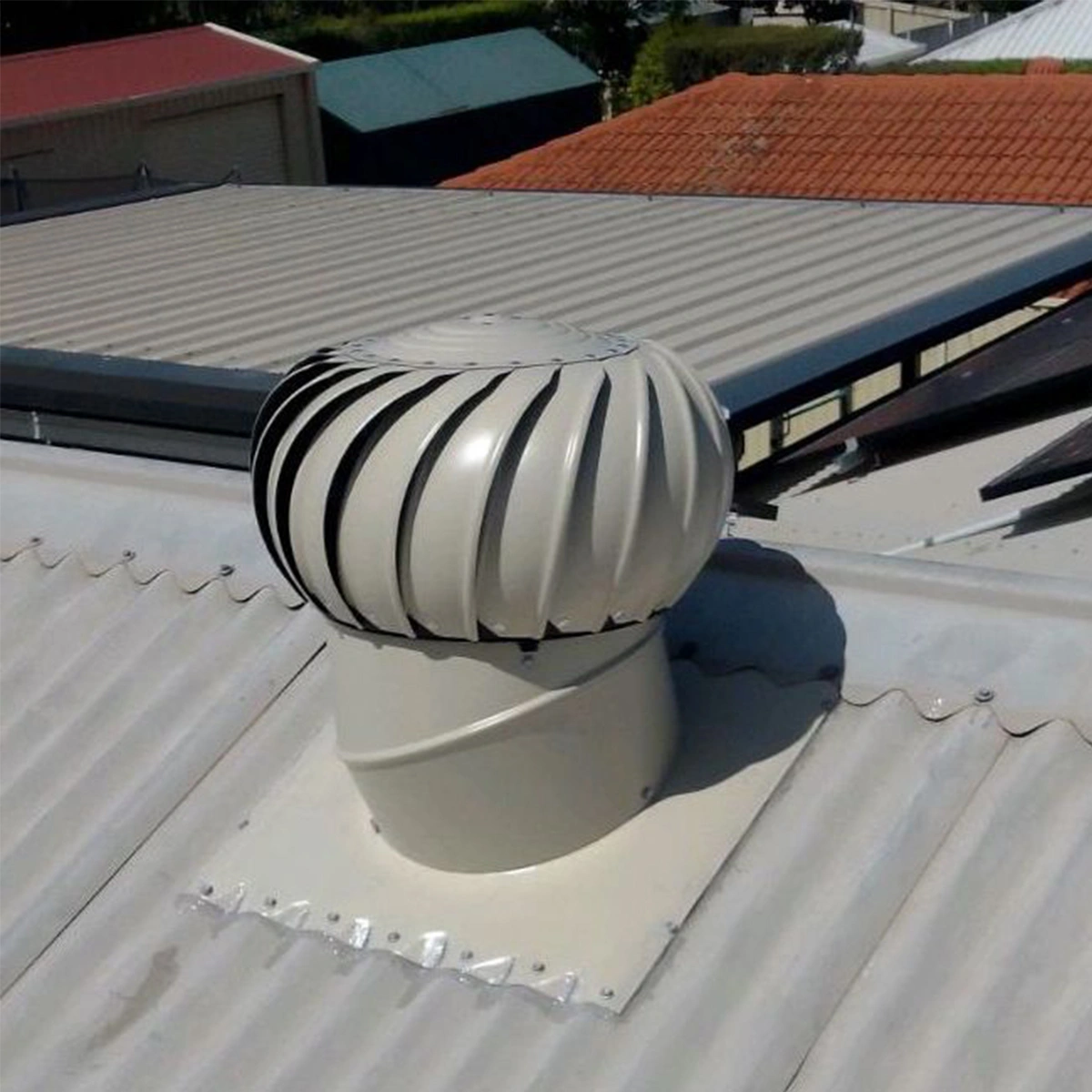
You have probably driven past homes with one lonely whirlybird spinning away, and others with four or five lined up along the ridge.
So which one is right?
How many whirlybirds do I need is one of the most common questions we hear from Brisbane, Ipswich and Logan homeowners. It sounds like it should have a simple number attached to it. In reality, the right count depends on the size of the roof and its shape, even the colour of your roof can play a role in how much heat builds up in your roof cavity.
Get it wrong and you either waste money on vents that do little, or install too few to make any real difference.
Why The Number Of Vents Matters
A single whirlybird can only move so much air.
On a small, simple roof, that might be enough to take the edge off. On a larger home with a big, hot roof cavity, one vent is often just a token effort. The heat keeps building faster than it can escape.
The Australian Government’s Your Home guide to passive cooling recommends whirlybirds and eave vents as part of good design in hot humid climates, and notes that roof ventilators can make ceiling insulation much more effective. That benefit only shows up when there is enough ventilation to actually change the temperature of the roof space.
So the goal is not to have a whirlybird. It is to have enough airflow for your roof.
What Decides How Many Whirlybirds You Need
There is no single rule that fits every house, but these are the factors that matter most.
Roof area and cavity volume
The bigger the roof space, the more hot air there is to move. A compact single-storey home and a large family home on a wide block are completely different jobs.
Roof shape and pitch
Hip roofs, multiple ridges and split levels can create pockets where hot air gets trapped. One vent in the middle may not reach those sections, so vents often need to be spread out.
Roof colour and material
Dark roofs and metal roofs tend to heat up faster in full sun. That puts more pressure on the ventilation to keep the cavity from turning into an oven.
Exposure to breeze
Whirlybirds are wind-driven. A home on an exposed hill will get more out of each unit than one tucked into a sheltered street where the air sits still on summer afternoons.
Airflow coming in
This is the one people forget. Ideally you want to have cool air being pulled into the roof cavity from eave ventilation. We generally recommend 4+ eave vents, to allow for the supply of fresher air. A lot of older homes might already have small holes in the eave for this reason.
Why Adding More Whirlybirds Is Not Always The Answer
It is tempting to think more is always better.
But if the home sits in a still pocket of the suburb, adding a sixth whirlybird may do less than you expect, because none of them are spinning when it matters most.
That is where powered options come in. A solar roof vent like the SolarKing uses a solar panel to drive a fan, so it works hardest when the sun is strongest. In many homes, one or two solar units can replace a row of passive whirlybirds. The Airomatic smart ventilator is another electrical option, with the manufacturer rating its flow rate as equivalent to up to six wind-driven vents.
So sometimes the better answer to how many whirlybirds you need is fewer vents that work harder.
The Signs Your Roof Needs More Ventilation
You do not need to climb into the roof to notice the pattern. The house usually tells you.
Common signs include:
- bedrooms that stay warm late into the night
- a ceiling that feels warm to the touch
- air con running longer than it should
- condensation or musty smells in cooler months
- a garage or upstairs area that always feels worse
If those sound familiar, the roof cavity is holding heat or moisture it cannot get rid of. But also, do you have good insulation?
Ventilation Only Works Well On Top Of Good Insulation
Here is where many homeowners get caught out.
They add whirlybirds, the roof space gets a little cooler, but the house still feels uncomfortable. That is often because the insulation on the ceiling has been up there for 15 or 20 years and is no longer doing its job.
Old insulation gets flattened, shifted by trades, damaged by pests and covered in dust. The Your Home guide to insulation discusses how to achieve good insulation.
Ventilation aims to reduce the heat load, therefore the insulation stops what is left, from reaching the rooms below. You need both working together to do their job.
Why Ceiling Vac Specialist Looks At The Whole Roof Space
When we quote a job, we do not just count ridgelines and pick a number.
We look at the size and shape of the roof and discuss your ceiling insulation.
Then we match the ventilation to the roof. That might be a set of Windmaster whirlybirds, one or more SolarKing solar fans, an Airomatic smart unit, or a mix, along with the eave vents needed to feed them.
Doing it all in one job means the roof space is sorted properly, rather than being patched one vent at a time.
Get The Right Ventilation And Insulation In One Job
If your home stays hot, the insulation is old, and you are unsure how many vents your roof really needs, the best next step is a proper quote for the full roof space.
Ceiling Vac Specialist removes old insulation, cleans the cavity, installs new insulation and supplies the right number of roof vents for homes across Brisbane, Ipswich and Logan.
Take a look at our whirlybird and roof ventilation options and our insulation removal and installation service, then book your free quote here.
Frequently Asked Questions About Whirlybirds
How many whirlybirds does an average house need?
It depends on the roof size, shape, colour and exposure to breeze. Smaller, simple roofs may need fewer, while larger or more complex roofs usually need several vents or a more powerful solar option.
Can you have too many whirlybirds?
It is possible to install more than a roof needs, especially without enough eave vents to let fresh air in. Balanced airflow matters more than simply adding vents.
Do whirlybirds actually reduce heat?
Yes, when there is enough breeze and enough units for the roof. The Australian Government’s Your Home guide notes that roof ventilators can significantly improve how well ceiling insulation performs.
Is one solar roof vent better than several whirlybirds?
In many Brisbane homes, a solar roof vent can move more air than several whirlybirds because it does not rely on wind. The right choice depends on the roof and how exposed the home is.
Should I replace my insulation when installing whirlybirds?
If the insulation is old, flattened or dirty, yes. Ventilation cools the roof space, but new insulation is what stops the remaining heat from reaching your rooms, so doing both together gives the best result.