

If your house keeps holding heat long after the sun has gone down, it does not take long before someone mentions roof vents.
Then the next question shows up.
Do you go with traditional Whirlybirds, or is a solar roof vent the smarter move?
For a lot of Brisbane homeowners, the answer is not obvious at first because both products are trying to solve the same problem. They are both there to help roof-space heat escape.
The difference is in how they do it, how much air they move, and what kind of result you are hoping for.
Both Are Trying To Solve The Same Problem
A hot roof space changes how your home feels.
Heat builds up under the roof during the day, presses down on the ceiling, and keeps affecting the rooms below well into the evening. That is why some homes still feel stuffy after sunset even when the outside air has already cooled.
Good roof ventilation Brisbane homeowners can rely on helps give that trapped heat somewhere to go.
That is the core job of both Whirlybirds and solar roof vents.
When Traditional Whirlybirds Make Sense
Whirlybirds are the option most people already recognise.
They use wind movement to spin and help draw hot air out of the roof cavity. They are simple, familiar, and can be a practical choice for homes that want a passive ventilation upgrade.
In the right setup, they can absolutely help.
They are especially useful when the roof layout, the number of vents, and the broader airflow strategy all make sense together. Like most roof ventilation, they perform best when they are part of a properly thought-through system rather than a one-off guess.
Where Solar Roof Vents Pull Ahead
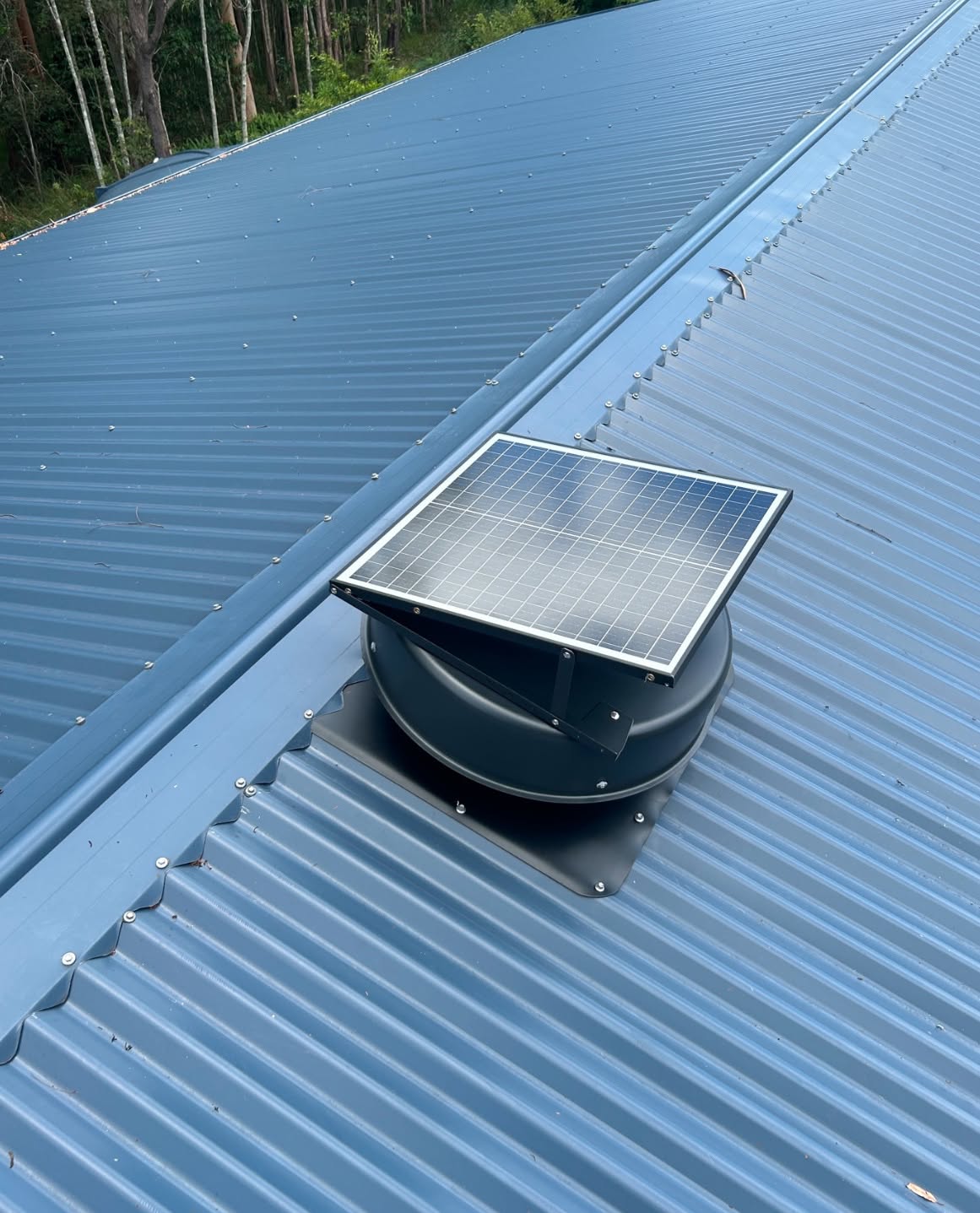
Solar roof vents take a more active approach.
Instead of relying only on natural wind movement, they use solar power to move air through the roof cavity. That can make a noticeable difference on hot, still days when passive airflow alone may not be enough.
This is why many homeowners start leaning toward SolarKing-style units once they understand how much heat can build up above the ceiling in South East Queensland.
Some solar roof vents are designed to move substantially more air than a traditional Whirlybird, which can make them a strong option for homes that struggle with persistent trapped heat.
They also avoid ongoing running costs because they are powered by the sun rather than the household electricity supply.
The Product Name Is Not The Whole Decision
This is important.
The better question is not just which product sounds better.
It is what your roof cavity actually needs.
Roof size matters. Roof shape matters. Existing airflow matters. The number of vents matters. Even the way eave ventilation is set up matters.
For example, roof ventilation works best when air can move through the space properly, not just escape at one point. That is why eave vents are often part of the conversation as well. Bringing cooler air in low and letting hot air out high creates a much better airflow path than simply adding a vent and hoping for magic.
Ventilation Works Better When Insulation Is Also Doing Its Job
Ventilation is powerful, but it is not meant to replace insulation.
These two systems do different jobs.
Ventilation helps reduce the heat building up in the roof cavity. Insulation helps slow whatever heat remains from moving through the ceiling into the rooms below. When both are working well, the home has a much better chance of staying comfortable without the air con working as hard.
That is why Ceiling Vac Specialist often talks about the roof space as a whole.
If the insulation is old, flattened, dusty, or underperforming, a new vent on its own will not solve every comfort problem in the house. In some homes, the best result comes from pairing roof ventilation installation with removal of old insulation and a fresh insulation install.
Which One Makes More Sense For Your Home
If you want a simpler passive solution, Whirlybirds may make sense.
If you want a more active airflow option that can move serious heat out of the roof cavity, SolarKing roof vents often become the stronger candidate.
But the right answer depends on the home, not just the brochure.
The Best Choice Is The One That Fits The Whole Roof Space
Home comfort problems rarely come from one small thing in isolation.
They usually come from a roof space that is running too hot, holding too much heat, or relying on old insulation that no longer performs the way it should.
If your home keeps feeling heavy, hot, or slow to cool down, the solution may be Whirlybirds, solar roof vents, better insulation, or a combination of all three.
The smartest next step is not guessing which product sounds best.
It is getting a proper quote on what will actually suit your roof and your home.
Call our friendly team on 0430046058 for a quote on roof ventilation.
Book your free quote with Ceiling Vac Specialist
Frequently Asked Questions
Are Whirlybirds Better Than Solar Roof Vents
Not automatically. Whirlybirds can work well as a passive option, while solar roof vents provide more active airflow. The better choice depends on your roof, your heat load, and what result you are trying to achieve.
Do Solar Roof Vents Cost Money To Run
No. They are powered by solar energy, so they do not add normal running costs to your power bill.
Can Roof Ventilation Reduce How Hot My House Feels
Yes. By helping trapped roof-space heat escape, ventilation can reduce the pressure on the ceiling and make the home easier to keep comfortable.
Do I Still Need Ceiling Insulation If I Add Roof Vents
Yes. Ventilation and insulation do different jobs. Ventilation helps reduce heat build-up in the roof cavity, while insulation slows heat transfer through the ceiling.
How Do I Know Which Ventilation Option Suits My Home
We take into account your roof size and discuss the issues you are facing in your home.